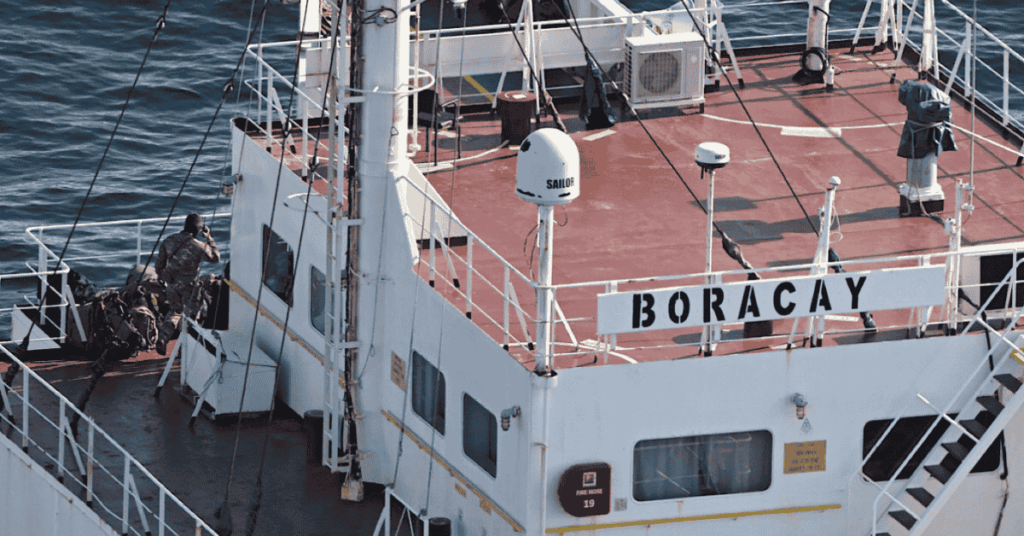
A French court has issued a one-year prison sentence for the captain of a tanker believed to be part of Russia’s “shadow fleet,” highlighting the escalating tensions surrounding Western sanctions on Russian oil exports. The ruling, delivered on March 30, 2026, also included a hefty financial penalty and an arrest warrant, marking France’s firm stance on enforcing maritime laws and international sanctions.
Table of Contents
- Captain’s Absence During Sentencing
- Shadow Fleet and Evasion of Sanctions
- French Navy’s Role in the Interception
- Concerns Over Russian Security Personnel
- Investigation into Drone Activity Connections
- EU’s Efforts to Tackle Shadow Fleets
- Wider Impact of the Case
- Conclusion
Captain’s Absence During Sentencing
Chen Zhangjie, the captain of the Boracay tanker, was sentenced in absentia by a court in Brest, France, on March 30, 2026. The court imposed a one-year prison term and a fine of €150,000 (around $172,000), after Zhangjie failed to attend the proceedings.
The charges stemmed from a September 2025 incident, where French naval forces intercepted and boarded the tanker Boracay off the coast. Despite orders to halt, the captain ignored them, leading to legal actions.

The Boracay and its crew were later released, but the case triggered an investigation, culminating in the court’s verdict. With an arrest warrant issued, Zhangjie could face detention if he enters a cooperating jurisdiction.
Shadow Fleet and Evasion of Sanctions
The Boracay is suspected to be part of Russia’s covert “shadow fleet,” a network of vessels used to bypass Western sanctions on Russian oil exports. These ships often operate under flags of convenience to evade detection and regulatory oversight, making it harder for authorities to track their activities.
Reports suggest that while the Boracay sailed under Benin’s flag, its true ownership raised doubts, triggering suspicion from European authorities. This tactic is commonly used by shadow fleet vessels to conceal their true affiliations.
French Navy’s Role in the Interception
The French Navy’s interception of the Boracay was a significant operation aimed at investigating suspicions regarding the vessel’s illegal oil trade activities. The French authorities acted based on intelligence reports and concerns over the tanker’s involvement in bypassing sanctions.
The interception sparked controversy, with Russia denouncing the action as “piracy.” Despite these protests, French officials defended their actions as necessary to uphold international law and enforce sanctions.
Concerns Over Russian Security Personnel
Adding another layer of intrigue, two Russian security agents were reportedly aboard the Boracay during the interception. These individuals were believed to be collecting intelligence on behalf of Russian interests, raising concerns that the ship’s activities extended beyond oil transport.
Although no charges were filed against the security personnel, their presence added to the suspicions about the vessel’s true purpose. European security agencies are closely monitoring similar incidents to assess potential threats.

Investigation into Drone Activity Connections
The Boracay has also been linked to a series of unexplained drone flights in Denmark in 2025. These drone incidents have raised concerns about possible links to Russian operations, though no direct evidence has been found connecting the Boracay to the drone activity.
The association between the Boracay and these drone flights has fueled fears of hybrid threats, where civilian operations may mask covert intelligence or military actions. Moscow has consistently denied involvement in the drone incidents.
EU’s Efforts to Tackle Shadow Fleets
The European Union has ramped up efforts to combat the shadow fleet by blacklisting vessels suspected of sanctions evasion. As of now, 598 vessels have been identified, and they are banned from European ports and maritime services.
This crackdown aims to disrupt the illicit operations of these vessels and send a clear message that evading sanctions will not be tolerated. The Boracay case is part of this broader strategy to ensure compliance with international laws.
Wider Impact of the Case
The sentencing of Chen Zhangjie reflects the growing importance of maritime law enforcement amid global geopolitical tensions. Incidents like this underscore the challenges in tracking and controlling global shipping activities, particularly when shadow fleets are involved.
For France and its European allies, this case highlights their commitment to ensuring that sanctions are upheld and that actors who attempt to bypass them face significant consequences. It also calls for increased international cooperation to address evolving maritime threats.
Conclusion
The one-year prison sentence for the captain of the Boracay marks a crucial step in enforcing sanctions against Russia. Although Zhangjie remains at large, the ruling serves as a stark reminder of the potential consequences for non-compliance with international laws.
The international community will be closely watching to see if these measures effectively curb the activities of shadow fleets and maintain the integrity of global sanctions regimes.