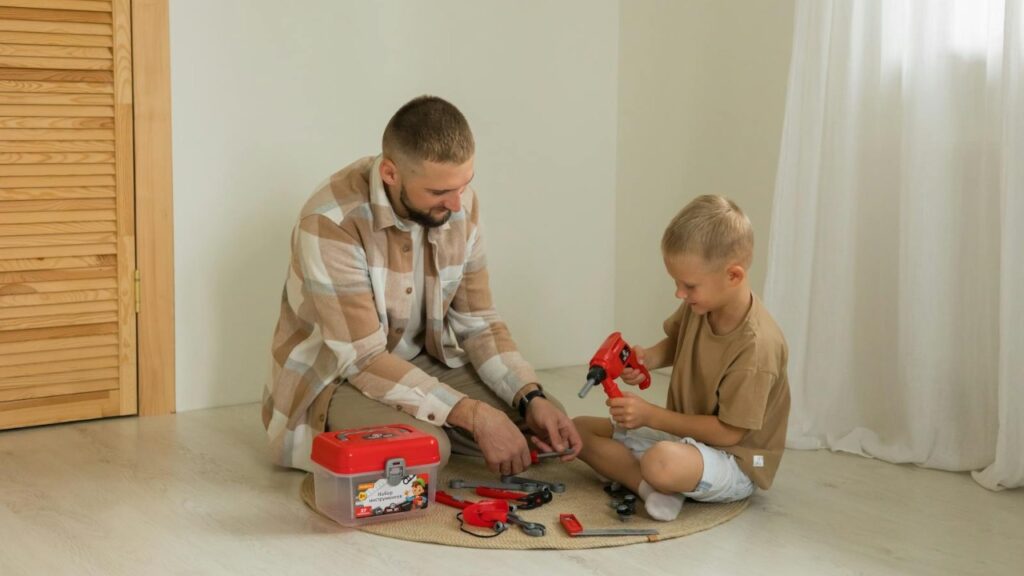
Watching children grow up today can feel like observing a completely different era.Modern parenting is structured, intentional, and deeply involved. Many young childrenfollow carefully planned routines filled with supervised play, educational activities,and constant parental presence. By today’s standards, this is considered ideal parenting—attentive, informed, and focused on development.
But when compared to childhoods from the 1960s and 70s, the difference is striking.Back then, children had far less supervision. Parents were often busy with work orhousehold responsibilities, leaving kids to manage their own time. Surprisingly, researchnow suggests that this lack of constant oversight may have played a crucial role in buildingemaotional strength and independence.
The “Unsupervised” Generation
Children growing up in the 60s and 70s experienced a level of freedom that is rare today.A typical day involved heading out in the morning and returning home by evening, oftenwithout any adult supervision. During that time, children created their own games, resolvedtheir own conflicts, and learned from real-world experiences.

This wasn’t considered neglect at the time—it was simply normal. Parents believed childrenwere capable of handling themselves, and hovering over them was seen as unnecessary or even unusual.
This environment unintentionally fostered independence. Kids learned how to deal with boredom,take risks, and solve problems on their own—skills that are now considered essential for mental resilience.
What Research Says About Independent Play
Psychologist Peter Gray, a researcher known for studying child development and play, has highlighteda significant shift over the past few decades. Since the 1960s, there has been a steady decline inchildren’s opportunities for independent, unsupervised play.
At the same time, mental health issues among young people—such as anxiety and depression—have increased.According to Gray, this isn’t just a coincidence. He argues that independent play helps children developan internal locus of control, which is the belief that they can influence their own lives.
Without this sense of control, children may grow up feeling helpless or overly dependent on external guidance,which can contribute to mental health challenges.
Key Findings from Recent Studies
A 2023 review published in The Journal of Pediatrics explored the long-term effects of reducedindependence in childhood. The findings suggest that limiting unstructured play may directly impactchildren’s emotional well-being.
Children who engage in independent activities tend to:
- Develop better emotional regulation
- Learn how to navigate social situations on their own
- Build resilience through trial and error
- Become more comfortable with uncertainty and failure
In contrast, highly supervised environments may prevent children from developing these critical life skills.
Boredom: An Overlooked Skill Builder
One of the most overlooked aspects of older childhoods is boredom. Decades ago, children frequentlyexperienced long stretches of unstructured time with nothing to do.
Unlike today, where boredom is quickly solved with screens or organized activities, kids in the pasthad to rely on their imagination. They invented games, explored their surroundings, or simply sat with their thoughts.
This type of boredom played an important role in developing self-soothing abilities. Children learnedthat they could handle discomfort without needing constant stimulation or external input.
Over time, this built emotional endurance—the ability to stay calm and balanced even when nothing exciting was happening.
When Did Things Start to Change?
The shift toward more structured and supervised childhoods began in the late 1970s and continued overthe following decades. Parents became increasingly concerned about safety, academic success, and long-term achievement.
As a result:
- Free playtime decreased
- Outdoor independence declined
- Adult supervision became constant
For example, in the early 1970s, a large majority of young children walked to school alone.Today, that idea often feels unsafe or unacceptable to many parents.

While these changes were made with good intentions, they may have unintentionally reduced opportunitiesfor children to develop independence.
The Fine Line Between Care and Overprotection
It’s important to clarify that neglect is not beneficial. Children need care, safety, and emotional supportto grow properly. However, there is a middle ground between neglect and overprotection.
Modern parenting often leans toward being highly involved—sometimes to the point where children have littlespace to make their own decisions or mistakes.
Experts suggest that children benefit from:
- Being trusted with small responsibilities
- Having time to play independently
- Facing manageable challenges without immediate help
This balance allows children to feel both secure and capable.
The Irony of Modern Parenting
Today’s parents have access to more information, tools, and resources than ever before. Yet, despite these advantages,many children struggle with anxiety and low resilience.
Ironically, the less structured environments of past decades may have provided something essential that is missing today: space.
Space to:
- Explore
- Fail
- Feel bored
- Solve problems independently
These experiences helped children build confidence naturally, without formal teaching or intervention.
Finding a Balance in Today’s World
Modern life comes with real challenges—busy cities, safety concerns, and digital distractions.It’s not practical or safe to completely replicate the childhood of the 60s and 70s.
However, parents can still incorporate elements of independence into their children’s lives by:
- Allowing unstructured playtime
- Reducing screen dependency
- Letting children solve minor problems on their own
- Encouraging creativity without constant guidance
Even small changes can make a significant difference in building resilience and self-confidence.
Conclusion
The parents of the 1960s and 70s didn’t intentionally follow a scientific parenting strategy.Their approach was shaped by circumstance, not research.
Yet, their children often developed strong emotional skills—not because of constant guidance,but because of the freedom to navigate the world independently.
The lesson for today isn’t to abandon modern parenting, but to recognize the value of stepping back.Sometimes, doing less can actually help children grow more.
Giving children space—to think, to struggle, to imagine, and to solve problems on their own—may be one of themost valuable gifts modern parenting can offer.