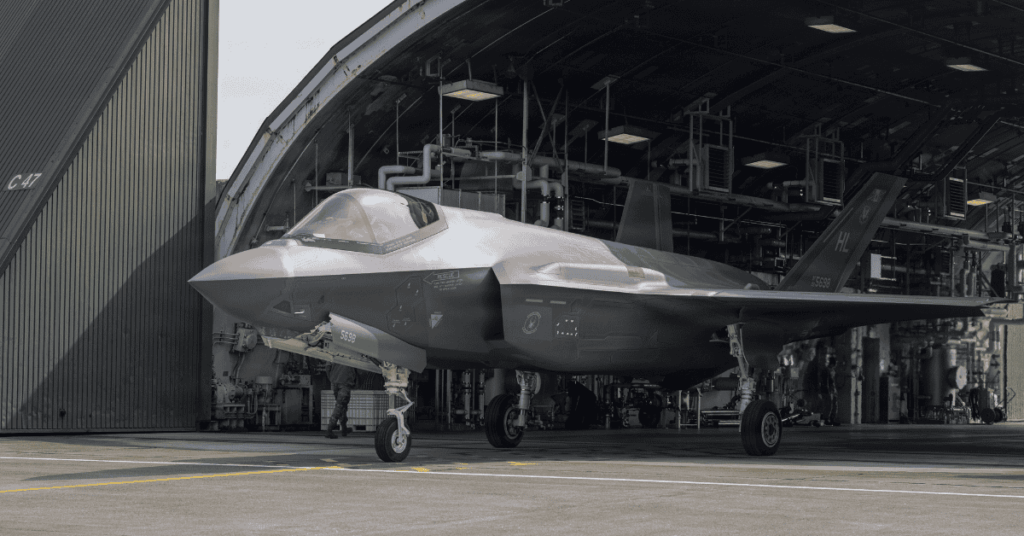
The United States Air Force has made a significant move to strengthen its military presence in the Indo-Pacific region with the arrival of advanced fifth-generation F-35A Lightning II stealth fighters at Misawa Air Base in northeastern Japan. This marks the start of a long-planned transition to replace the aging F-16 Fighting Falcons, which have been stationed at the base for decades.
The arrival, confirmed by images released by the Defense Visual Information Distribution System, involved an undisclosed number of F-35A aircraft landing at Misawa on Saturday. The aircraft have been assigned to the 13th Fighter Squadron, a crucial unit under the 35th Fighter Wing.
Table of Contents
- Transition from F-16s to Fifth-Generation Airpower
- Strengthening Regional Security and Alliances
- Part of a Broader U.S. Force Realignment
- The Role and Capabilities of the F-35A
- Preparing for the New Aircraft
- Challenges Facing the F-35 Program
- A Strategic Move with Long-Term Impact
Transition from F-16s to Fifth-Generation Airpower
The deployment of F-35A aircraft is part of a broader modernization plan announced by the U.S. Air Force in 2024. Under this plan, the 36 F-16 Fighting Falcons previously stationed at Misawa will be replaced by a total of 48 F-35A Lightning II aircraft. This transition represents a major upgrade in technology, capability, and operational flexibility.

As one of the world’s most advanced multirole fighters, the F-35A offers enhanced stealth, advanced sensors, and superior data-sharing capabilities that far exceed those of the older F-16 platform. This upgrade reflects the Air Force’s commitment to maintaining technological superiority in a strategically significant region.
Strengthening Regional Security and Alliances
The deployment of F-35A fighters at Misawa plays a critical role in reinforcing regional security and strengthening the U.S.-Japan alliance. According to a statement on the air base’s official social media, the new aircraft will enhance the Air Force’s ability to maintain combat-ready airpower in northern Japan, improve coordination with allied forces, and support peace and stability across the Indo-Pacific.
Misawa Air Base serves as a strategically important installation shared by the U.S. Air Force and the Japan Air Self-Defense Force (JASDF). Japan has operated its own F-35A aircraft from Misawa since 2018, making the base a hub for advanced joint air operations.
Part of a Broader U.S. Force Realignment
The arrival of F-35As at Misawa is just one component of a larger U.S. military realignment effort in Japan. This initiative includes several upgrades across different branches of the armed forces.
For example, the U.S. plans to station F-15EX Eagle fighters in Okinawa to bolster air superiority capabilities. Additionally, Marine Corps Air Station Iwakuni will see the Navy replace its F/A-18 Super Hornets with carrier-capable F-35C variants.
The U.S. Department of Defense, in coordination with the Japanese government, stated in July 2024 that this comprehensive plan, with an investment exceeding $10 billion, aims to enhance military readiness, strengthen deterrence, and promote a free and open Indo-Pacific region.
The Role and Capabilities of the F-35A
The F-35A Lightning II is the conventional takeoff and landing variant of the F-35 family and is the most widely used among the three versions. The F-35B, used by the Marine Corps, features short takeoff and vertical landing capabilities, while the F-35C, designed for aircraft carrier operations, is used by the Navy.
 A Generation That Showed Love Through Providing—and the Children Who Learned to See It Differently
As a multirole fighter, the F-35A can perform various missions, including air superiority, ground attack, air defense, intelligence gathering, and electronic warfare. Its versatility makes it a cornerstone of modern air combat strategy.
One of its most defining features is its advanced sensor suite, which provides pilots with unparalleled situational awareness. Additionally, the F-35A acts as a networked hub, capable of sharing real-time data with other platforms across air, land, and sea domains, significantly enhancing joint operations.
Preparing for the New Aircraft
In preparation for the arrival of the F-35A aircraft, the 35th Fighter Wing has already taken significant steps to ready its infrastructure and personnel. In June, the wing established the 35th Munitions Squadron, which is composed of 225 airmen previously assigned to maintenance roles. This squadron is specifically tasked with supporting the advanced weapons systems associated with the F-35.
The 35th Fighter Wing is also known for its specialization in “Wild Weasel” missions, which focus on suppressing and destroying enemy air defenses. The addition of the F-35A aircraft is expected to greatly enhance these capabilities, due to the aircraft’s advanced stealth and electronic warfare features.
Challenges Facing the F-35 Program
Despite its advanced capabilities, the F-35 program has encountered several challenges in recent years. The U.S. Air Force temporarily halted deliveries of F-35 aircraft between July 2023 and July 2024 due to issues with a core processor component. This delay raised concerns about production timelines and operational readiness.
A report released by the Government Accountability Office (GAO) in April 2024 highlighted ongoing challenges with the F-35 fleet, including lower-than-expected availability rates, reliability issues, and maintenance difficulties. These challenges stem from factors such as reliance on contractors, inadequate training, limited access to technical data, and shortages of spare parts.
A Strategic Move with Long-Term Impact
The arrival of the F-35A fighters at Misawa Air Base is not just a routine deployment; it’s a strategic maneuver aimed at reinforcing the United States’ commitment to its allies and ensuring regional stability in a rapidly changing geopolitical landscape.
By positioning its most advanced aircraft in Japan, the U.S. is sending a clear message of dedication to regional security and readiness to respond to emerging challenges. As the Indo-Pacific region continues to grow in importance, investments like these will play a critical role in shaping the balance of power and ensuring long-term peace in the area.