Self-checkout has become a common feature in modern shopping. It’s fast, efficient, and widely embraced. In fact, many shoppers now rely on it regularly.
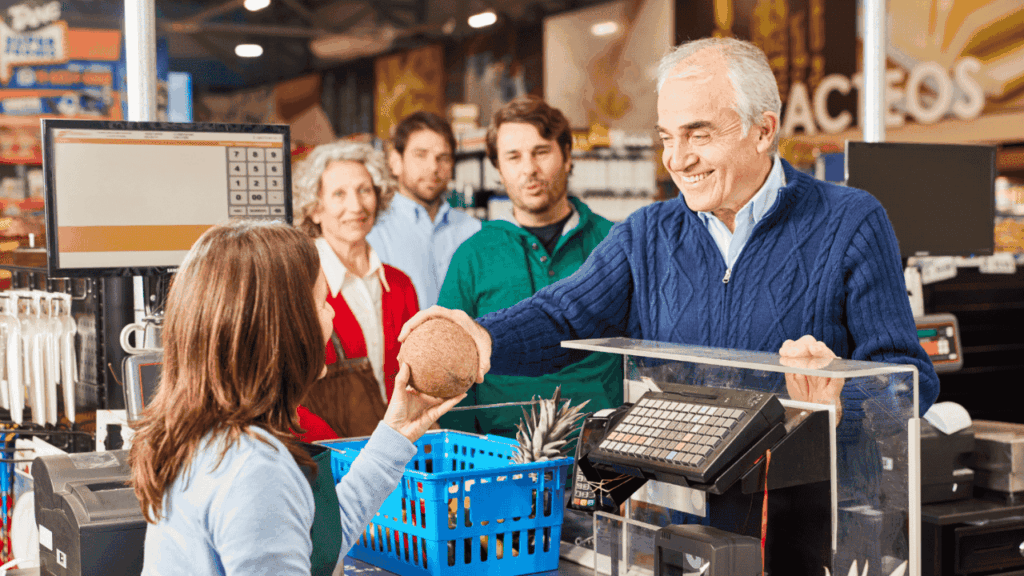
However, not everyone opts for convenience. Some people deliberately choose longer lines to engage with a human cashier. This might seem inefficient, but psychology suggests there’s a deeper reason behind it—these individuals are seeking small, meaningful moments of human connection.
The Impact of “Weak Ties”
Psychologists refer to these brief, low-stakes interactions as “weak ties.” They aren’t deep relationships, but simple exchanges—a smile, a brief greeting, a quick chat. Though these moments seem trivial, they play a significant role in emotional well-being.

Whether it’s talking to a barista, greeting a neighbor, or briefly interacting with a cashier, these small moments create a sense of belonging. They form the invisible threads that weave our daily lives together.
The Value of Small Moments
It’s often the simplest interactions that provide rhythm to our lives. Think about:
- A familiar face at the store
- A short chat during a routine errand
- Someone remembering your usual order
These exchanges are often overlooked, but when they vanish, something feels wrong. Life becomes quieter in a way that feels disconnected. Self-checkout systems, though efficient, remove these moments entirely. While they speed up the process, they eliminate the human touch.
When Efficiency Replaces Connection
Technology has streamlined many aspects of life. Yet, in doing so, it has reduced opportunities for human interaction. For people who are isolated, work remotely, or are facing tough times, these small exchanges are especially important.
A brief conversation at a checkout counter might be one of the few face-to-face interactions they have all day. What appears to be a simple transaction may, in fact, be a valuable moment of connection.
The Emotional Significance of Routine Interactions
For someone dealing with grief, stress, or isolation, even a friendly exchange can:
- Provide a sense of normalcy
- Offer a brief distraction
- Help reinforce the feeling of being seen
These aren’t deep conversations, but their value lies in their simplicity. A machine, no matter how efficient, can’t replicate this experience.
The Hidden Cost of Efficiency
From a business standpoint, self-checkout reduces costs and speeds up transactions. But from a human perspective, something essential may be lost. When these interactions are removed, so is a layer of social connection.

Over time, this loss can contribute to feelings of isolation, especially in a world where many connections have shifted online. While efficiency addresses practical issues, it doesn’t cater to emotional needs.
It’s Not Just About Nostalgia
Opting for a human cashier isn’t just about resisting technology or longing for the past. Research suggests that people are motivated by basic psychological needs like:
- Autonomy (having choice)
- Competence (feeling capable)
- Relatedness (feeling connected)
The desire for human interaction often stems from the need for relatedness—the desire to be recognized and feel part of a shared experience.
The Importance of Choice
It’s essential to recognize that not everyone seeks interaction all the time. Some prefer self-checkout for privacy, speed, and control. On certain days, avoiding conversation might feel like the right choice.
The key is balance. When both options are available, people can decide based on their needs—connection or solitude. But if human interaction is completely removed, so too is the choice.
The Courage to Slow Down
In a society focused on speed and efficiency, opting for a slower pace can feel unusual. But standing in line for human interaction isn’t always about time—it’s about intention.
It’s about valuing connection, even in small forms. These moments may seem insignificant, but over time, they add up, reminding us that we’re part of a larger social world.
Conclusion
The next time you use self-checkout, consider: what are you gaining—and what might you be losing? For many, those brief interactions at a checkout counter are more than just routine. They are small anchors in an increasingly fast-paced, digital world. While they may seem minor, they can make the difference between a day that feels transactional and one that feels truly human.