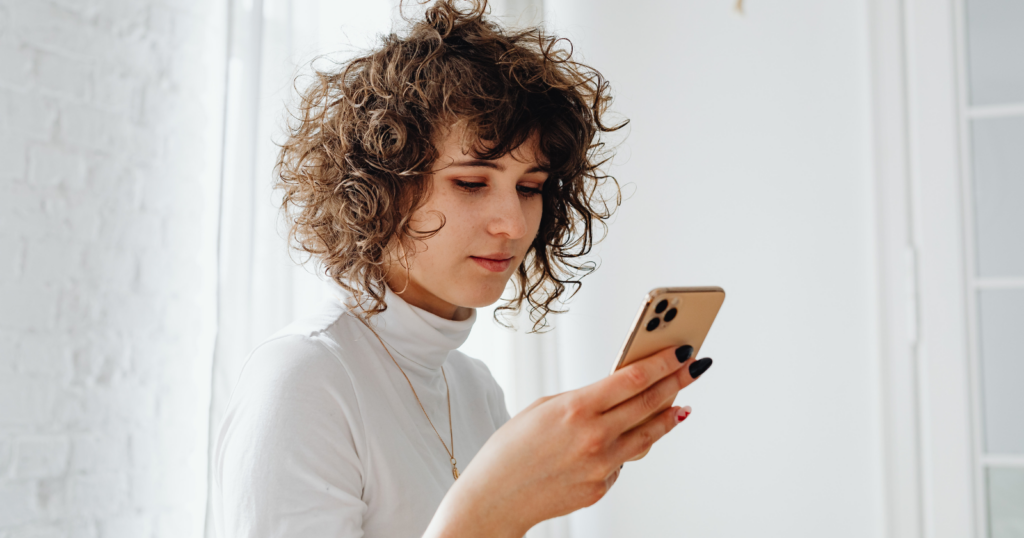
Try this once: open your favorite social media app and scroll through the last twenty posts. Then stop for a moment and ask yourself: how many of those posts came from a genuine desire to say something meaningful, and how many were shared simply to escape the discomfort of silence?
I began thinking about this around two years ago, at the same time I quietly stepped away from posting on most social platforms. I still browse. I still read. I still catch up on headlines and stories. But I chose to distance myself from the performance side of social media. And over time, I’ve come to realize—through both personal experience and research—that not participating can sometimes be one of the healthiest and most self-aware decisions you make online.
Most people online aren’t posting
People who grow up around quiet authority often learn an important lesson early: real presence does not need to make noise to be felt. In many ways, the same idea applies online.

Research from Northeastern University suggests that nearly 90% of social media users are what we call “lurkers.” They watch, read, and consume content without posting, commenting, liking, or sharing. They are present, but silent.
That means the majority of people online are not actively contributing content. Yet most conversations about social media revolve around the people who do post. Those who remain silent are often ignored, misunderstood, or treated as though they are using these platforms the wrong way.
But silence does not mean disengagement. As researchers have pointed out, the content people consume continues to shape their thoughts, decisions, and worldview even when they never interact publicly. In that sense, silent users are not disconnected—they are simply engaging in a quieter, more private way.
I’ve felt this most strongly on platforms like LinkedIn. It’s useful, informative, and important for work. But the constant performance of ambition, productivity, and polish can feel exhausting. Once I realized I could still benefit from the platform without participating in that performance, the entire experience started to feel lighter.
The performance problem
To understand why stepping back can feel so freeing, it helps to look at what posting actually demands from us.
Sociologist Erving Goffman described social interaction as a kind of performance. In everyday life, people present different versions of themselves depending on the audience. Social media intensifies this process. Every post becomes a public display, visible to a wide and often unpredictable audience, and preserved far longer than a regular conversation ever would be.
What might once have been a small act of self-expression now becomes a form of identity management. You are no longer just speaking—you are curating how hundreds or even thousands of people might interpret you.
That kind of self-presentation takes effort. People often edit themselves carefully online, highlighting polished, idealized, or socially acceptable versions of who they are while hiding anything that feels too messy, uncertain, or unfiltered. Over time, this can create emotional strain.
I learned this early in my career when something I wrote spread widely for reasons I never intended. My words were misunderstood, and suddenly I found myself trying to manage reactions I had never anticipated. It taught me something I’ve never forgotten: once something is posted online, control over its meaning no longer fully belongs to you.
There is also another kind of fatigue that builds slowly—the fatigue of maintaining a version of yourself that feels polished but incomplete. It’s not always dramatic, but it can be deeply draining.
Meanwhile, meaningful relationships rarely depend on constant visibility. Some friendships remain strong even after long silences. Some of the most genuine conversations happen in private messages, not on public feeds. Choosing not to post is not always avoidance—it can be a move toward something more honest.
Why passive use gets a bad reputation
The idea of “lurking” often carries a negative tone. Many studies have associated passive social media use with poor mental health outcomes, especially when it leads to social comparison, fear of missing out, or feelings of inadequacy.
That concern is real. But it also misses an important distinction: not every kind of passive use is the same.
There is a difference between mindless late-night scrolling that leaves you comparing your reality to someone else’s highlight reel, and intentional browsing that helps you stay informed while avoiding the pressure to perform.

More recent research has started to reflect this nuance. A 2024 study in Frontiers in Psychology found that people choose to stay quiet online for many reasons, and not all of them are negative. Some want more privacy. Some feel social media fatigue. Others simply realize that they can still learn, observe, and remain informed without needing to constantly present themselves.
What makes this especially interesting is that these users are not rejecting connection altogether. They are separating the informative side of social media from the performative side. They keep what is useful and let go of what feels draining. From that perspective, passive use is not careless—it can be deeply intentional.
What changed when I stopped posting
I can trace my own shift to a period when I noticed something consistent: my worst mental health days often overlapped with the times I felt most “online.” Not just from reading content, but from the pressure of writing posts, rechecking words, monitoring reactions, and staying mentally available for responses.
When I stopped posting, I assumed I might feel disconnected. Instead, I felt relieved.
I still followed ideas that mattered to me. I still learned from other people’s perspectives. I still used social media as a source of information. But without the pressure to contribute publicly, the entire experience changed. It stopped feeling like a stage and started feeling more like a resource.
My curiosity didn’t disappear. I still noticed things, collected ideas, and reflected on patterns. The only difference was that I no longer felt compelled to turn every observation into content.
Research supports this shift. A study published in JAMA Network Open found that reducing social media use, even for a short period, was associated with decreases in anxiety and depression among young adults. While that study focused on usage more broadly, it reinforces the larger point: stepping back from constant participation can improve emotional well-being.
The value of not participating
What’s striking is how rarely we treat non-participation as a conscious and valid choice. We have plenty of labels for people who post regularly—creators, influencers, commentators, thought leaders—but very little language for those who decide not to broadcast themselves.
And yet many quiet users are highly thoughtful, observant, and engaged. They pay attention. They form opinions. They stay informed. They simply do not feel the need to make every thought public.
I used to believe that visibility was tied to relevance—that if I wasn’t posting, I was somehow falling behind or becoming less meaningful. Over time, I’ve learned that this is not true. Some of the most insightful, grounded, and impactful people I know barely maintain any online presence at all. They focus more on substance than visibility.
In a culture that constantly encourages expression, choosing restraint can be powerful. Silence is not always emptiness. Sometimes it reflects clarity.
Final thoughts
If you’ve been quietly scrolling and feeling slightly guilty for not posting, it may be time to question that guilt.
Stepping back from the performative side of social media is not necessarily avoidance. In many cases, it is self-preservation. It is a way of protecting your attention, your peace, and your sense of self from a space that often rewards visibility more than depth.
Choosing not to post does not mean you are disconnected. It can simply mean you are being more intentional about where your energy goes. In a world that constantly rewards noise, silence can be one of the most deliberate choices a person makes.